How to Become a Fearless & Effective Communicator!
 In the last training (part 4), we talked deeper about story-telling.
I shared with you 2 secrets for coming up with compelling stories.
But remember that…
Story-telling alone will NOT enable you to become an effective communicator.
Beyond story-telling, there are 3 x-factors that affect your ability to persuade and influence.
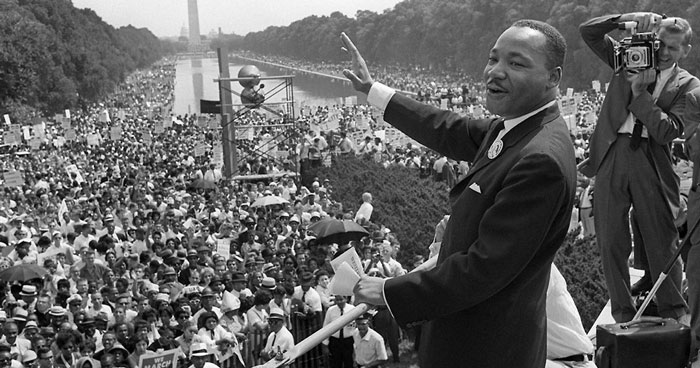
Take Martin Luther King as an example.
Beyond just story-telling, how was he able to persuade and influence?
In the last training (part 4), we talked deeper about story-telling.
I shared with you 2 secrets for coming up with compelling stories.
But remember that…
Story-telling alone will NOT enable you to become an effective communicator.
Beyond story-telling, there are 3 x-factors that affect your ability to persuade and influence.
Take Martin Luther King as an example.
Beyond just story-telling, how was he able to persuade and influence?
 Many years before I became the World Champion of Public Speaking, I used to also think that it was just about what you say.
I used to think that it was just about telling stories.
It was one of my mentors who made me realise that it was more than that.
Many years before I became the World Champion of Public Speaking, I used to also think that it was just about what you say.
I used to think that it was just about telling stories.
It was one of my mentors who made me realise that it was more than that.
In order for you to become an effective communicator, you need to master the 3 X-factors.
The X-factors are: Words, Voice, Body Language. This is based on several studies in the 1970s, conducted by Prof. Albert Mehrabian. Through his studies, he discovered the amount of importance for each X-factor: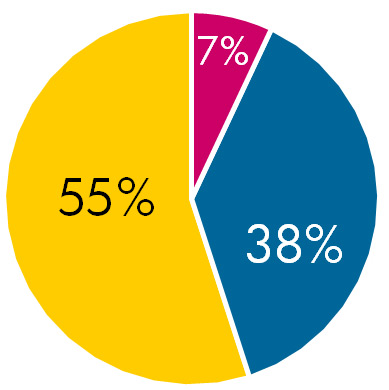 Pink Colour: Words (7%)
Blue Colour: Voice (38%)
Yellow Colour: Body language (55%)
You can see that Verbal (words) is only 7%.
The importance of what you say is only 7 percent!
Instead, non-verbal (voice+body language) makes up a total of 93%.
Pink Colour: Words (7%)
Blue Colour: Voice (38%)
Yellow Colour: Body language (55%)
You can see that Verbal (words) is only 7%.
The importance of what you say is only 7 percent!
Instead, non-verbal (voice+body language) makes up a total of 93%.
Let me just elaborate further on what each X-Factor is…
- Words: This about the words and message that you say.
- Voice: This consists of the tone of your voice, the rhythm of how you say it and the speed of how you say it.
- Body Language: This is about the hand gestures that you use, your eye-contact and facial expressions as well as your posture and movement.
 Doubts such as:
“I don’t have a very good first impression of this guy”
“I have bad vibes about this person…”
“Is he sure about what he’s even talking about?”
(despite you being an expert about it)
“What is he trying to say?”
“I feel so bored listening to this guy.”
Doubts such as:
“I don’t have a very good first impression of this guy”
“I have bad vibes about this person…”
“Is he sure about what he’s even talking about?”
(despite you being an expert about it)
“What is he trying to say?”
“I feel so bored listening to this guy.”
Remember your words (what you say) only play a very SMALL role (7%).
If you become aware and use nonverbal communication, people will have a different reaction. Instead, they will say: “This guy knows what he’s talking about.” “I enjoy talking to this person very much.” “He really has very good ideas.” “This guy is capable of bigger things.” “He’s very interesting to listen to.” So if you want to be a persuasive and effective communicator master verbal AND non-verbal communication. This is why I’ve designed a unique online training to help people to master the CMVT Quadrant:
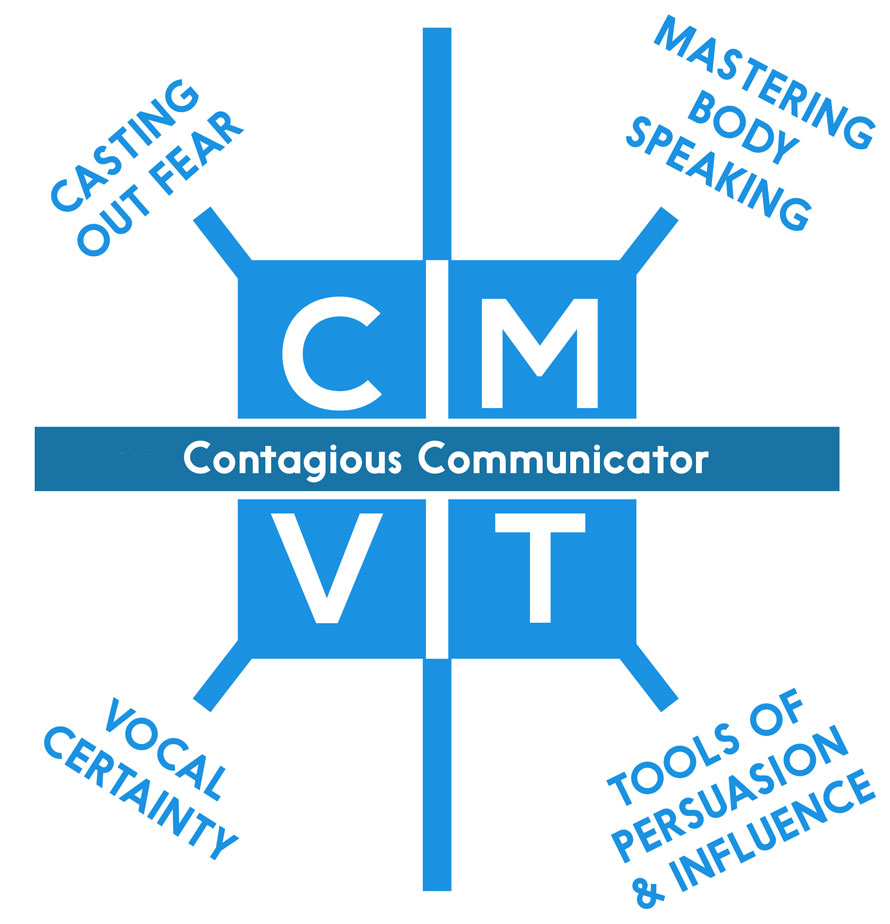 I came up with the CMVT Quadrant because…

- Specific techniques to permanently conquer your fear of speaking in front of a small or large crowd permanently
- Methods to conduct exciting training sessions & Transmit Your Knowledge to Others
- Plus: The art of story-telling, body language and many more.
Leave a Reply